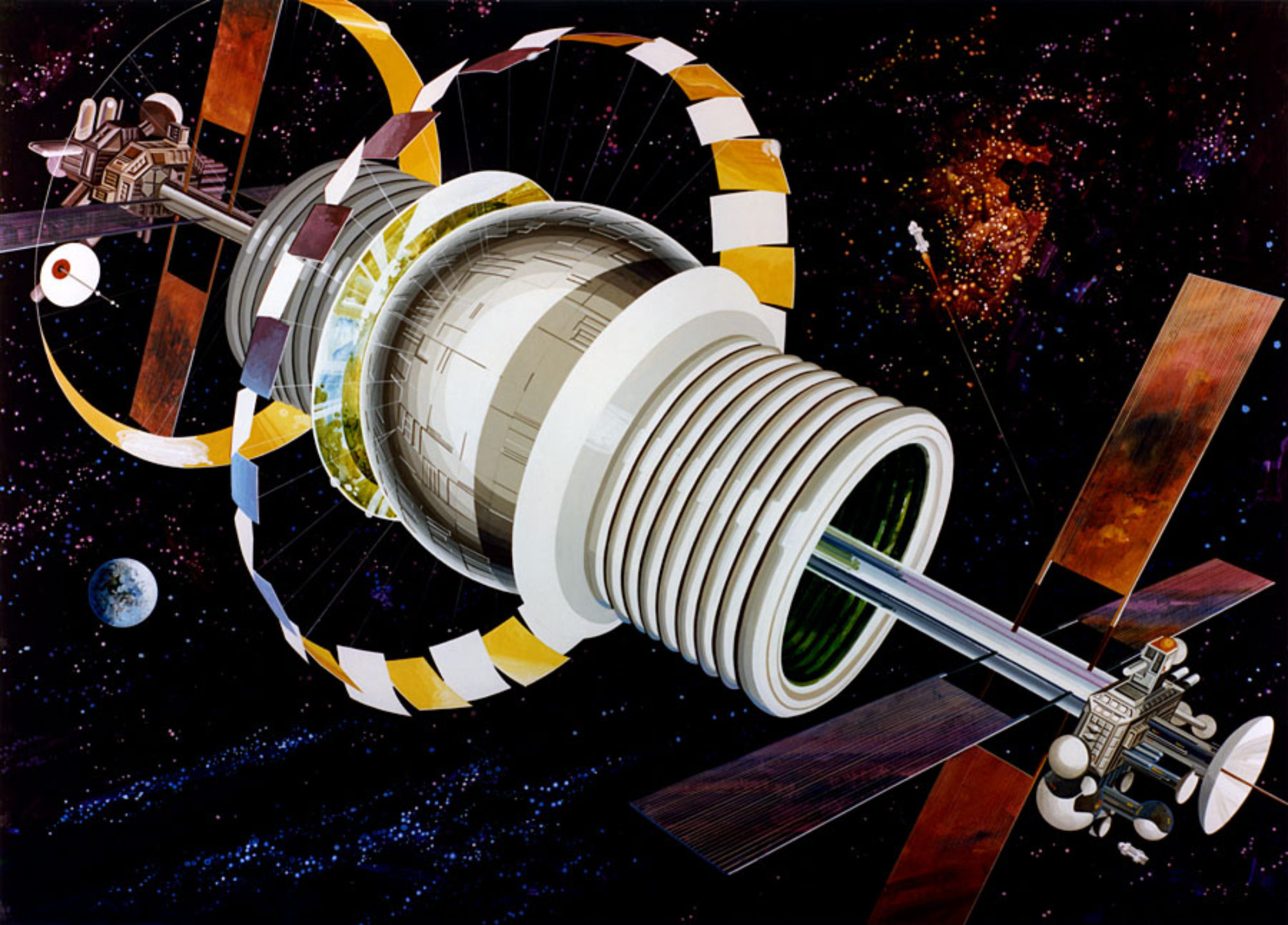

In a press release last month, Colorado-based startup Rendezvous Robotics announced a $20 million oversubscribed seed round to develop spacecraft that assemble themselves in orbit. Led by MaC Venture Capital and Toyota Ventures, with participation from the University of Michigan Endowment, Astera Ventures, Industrious Ventures, Aurelia Foundry, ATX Venture Partners, Mana Ventures, and others, the funding will be used for an in-space demonstration planned for no earlier than April 2028. This builds on nearly a decade of work on TESSERAE and a prior $3 million pre-seed round that brought the company out of stealth in September 2025.
The core challenge is straightforward: modern satellites and structures demand more power, larger antennas, greater heat dissipation, and higher performance, yet rocket fairings impose strict size limits on cargo. Traditional solutions involve complex origami-style folding of payloads and/or multiple launches . Rendezvous Robotics will instead launch modular components that self-assemble after reaching orbit. Its technology uses roughly one-meter hexagonal tiles, each an independent spacecraft equipped with sensors, onboard processing, electromagnetic actuators, mechanical latches, power/data interconnects, and payload capacity. The tiles stack flat for launch with no folding required. Once on orbit they locate one another, maneuver via electromagnetic forces, dock, correct errors, and form rigid structures that can later expand, reconfigure, or replace components. As CEO Joe Landon put it in an interview with Payload, “Nobody’s talking about making satellites smaller and less capable. They’re talking about more capable satellites… and we can’t do that until we figure out how to build in space.”
From MIT Sketch to Commercial Spacecraft
TESSERAE—Tessellated Electromagnetic Space Structures for the Exploration of Reconfigurable, Adaptive Environments— was invented by Dr. Ariel Ekblaw during her doctoral work at the MIT Media Lab. Inspired in part by a 2016 design course and concepts of programmable matter, Ekblaw developed modular polyhedral tiles (typically hexagons and pentagons) that use electro-permanent magnets for controllable bonding and a sensor network for diagnostics and error correction. The target finalized geometry is often a truncated icosahedron, or “buckyball,” resembling a geodesic dome or the carbon molecule buckminsterfullerene (C60). This approximates a sphere to maximize enclosed volume for a given surface area while the individual elements pack flat for launch. Named after the plural of tessera, the small tiles of Roman mosaics, the system aims for reconfigurable, adaptive environments rather than static cylindrical modules.
Ekblaw incubated the work at the nonprofit Aurelia Institute, which she founded in 2022. Prototypes progressed through multiple generations: zero-gravity parabolic flights starting in 2017, a 2019 Blue Origin New Shepard suborbital flight testing sensors and magnet actuation, a 2020 SpaceX CRS-20 mission to the ISS with seven tiles demonstrating multi-day autonomous assembly and reconfiguration inside a controlled enclosure, and further testing on the 2022 Axiom Space Ax-1 private astronaut mission. These test campaigns validated docking, error correction, and the feasibility of magnetic self-assembly in microgravity. By late 2025, fifth-generation (Gen-5) tiles had completed NASA qualification testing ahead the third ISS demonstration planned for next month. This experiment will test 32 tiles (20 hexagons and 12 pentagons sized at 21 cm and 19 cm, respectively), 192 cameras for visual bond-state sensing, 384 electro-permanent magnets, and a new dispenser system designed to assemble a full three-dimensional sphere inside a station experiment enclosure.
Rendezvous Robotics is commercializing the patented technology. Co-founded by Ekblaw (inventor and board chair), Phil Frank (experienced technology executive), and Joe Landon (space industry veteran with backgrounds at Boeing and Lockheed Martin), the Golden, Colorado company draws engineering talent from SpaceX, NASA, Blue Origin, and related firms. Landon has emphasized that habitats and large stations remain in the long-term vision, but near-term focus has shifted to satellites and infrastructure where demand for scale and flexibility is acute—large apertures for sensing or communications, higher-power systems, orbital compute with substantial heat rejection, and reconfigurable platforms for commercial, civil, and national security missions. Tiles can integrate computers, solar arrays, radiators, propulsion, or antennas. Operators can add tiles, replace failed ones, or reconfigure the physical structure after launch rather than building an entirely new satellite.
The next near-term milestones include a parabolic flight campaign planned this month for electromagnetic actuation and mobility testing, next month’s ISS Gen-5 demonstration of the 32-tile 3D assembly mentioned previously, and the 2028 free-flight rideshare mission. In the latter, seven independent tiles will autonomously join into a functional spacecraft, then separate and reassemble into a different configuration—the first such free-space demonstration of the commercial architecture. Longer term, the company envisions orbital depots of staged tiles for on-demand servicing and expansion, evolving in-space servicing operations beyond simple life extension.
Habitats, Biolabs, and Human-Centered Design
While commercial satellites drive the near-term business case, the original TESSERAE vision—and ongoing work at Aurelia—centers on habitats and adaptive environments. SSP reported last year on a paper presented at the 2024 International Conference on Environmental Systems by Aurelia researchers (including Ekblaw) detailing a flight-scale concept for a biotechnology research outpost in low Earth orbit. The design uses the same configuration to be tested next month of 32 tiles, but larger in size, launched in a stacked dispenser. After orbital self-assembly via electro-permanent magnets, clamping, and gasketing, it yields roughly 493 m³ of pressurized volume. For a crew of four (two biotechnologists and two career astronauts), this provides about 123 m³ per person—comparable in occupancy density to the ISS or Tiangong—with permanent quarters and dedicated lab space.
Biotechnology applications leverage the advantages of microgravity: superior protein crystallization for structural biology and drug discovery (addressing conditions such as muscular dystrophy or certain cancers), and production or preclinical testing of biologics (proteins, antibodies, and related molecules). The concept supports “fly-your-own-experiment” models for scientists, aligns with NASA commercial LEO destination goals as the ISS approaches retirement, and could accelerate terrestrial pharmaceutical pipelines. Subsystem analyses address distributed ECLSS (Environmental Control and Life Support System) for redundancy, thermal management challenges from the higher surface-area-to-volume ratio, power generation in the 20–30 kW class via deployable solar arrays, and guidance/attitude control minimizing propellant use. Critical systems integrate into tiles pre-launch; secondary outfitting occurs via robotics or limited EVA after pressurization. Operations envision 1–6 month crewed expeditions with uncrewed intervals and cargo resupply.
Interior design draws on human-centered principles, user research with astronauts and scientists, and activity-based approaches. Five guiding “desirements” include bodily navigation and psychosocial needs, microgravity-specific affordances (multi-axis movement), sensory mediation through lighting/acoustics/airflow, accessible clutter-free stowage, and a balance of fixed and reconfigurable elements. One layout features a central socialization and exercise node ringed by radial spokes for private quarters, labs (with vibration isolation for crystallization and containment for biologics), hygiene, and utilities. Biophilic elements, variable LED lighting for circadian support, acoustic treatments, and magnetic mounts for flexibility address the needs of mixed professional and non-professional crews. The open-central geometry of the buckyball creates both challenges and opportunities distinct from cylindrical modules.
I first posted on Dr. Ekblaw’s work back in 2020 when the interior design of a TESSERAE self-assembling space station concept was explored. This complementary architectural work by Anastasia Prosina (at the time, MIT Media Lab visiting student and later, co-founder/CEO of Stellar Amenities) examined living space within a TESSERAE module for a crew of eight on a three-month mission. Drawing on Japanese Metabolism (the post-war architectural movement blending megastructures with organic growth), and human-centered design, the approach minimizes mass and volume while prioritizing function and well-being. Features include a dedicated meditation corridor for self-reflection amid the isolation of space, efficient habitation cores, and layouts that exploit the modular shell. Earlier collaborative papers with Ekblaw, Dava Newman, and Joseph Paradiso framed TESSERAE as enabling reconfigurable, self-aware architecture that can grow, adapt, and potentially support surface applications after disassembly and transport.
Aurelia has realized aspects of this vision on the ground through the TESSERAE Space Habitat Pavilion—a full-scale interactive model exhibited at venues including the MIT Media Lab—inviting visitors to experience communal, biophilic, and human-scaled interiors suited to a future of more routine orbital presence. Broader applications sketched in the research include geodesic habitats, specialized research outposts, and even cultural spaces; interlocking modules could form larger stations. Related commercial interest has touched orbital data centers and large-scale infrastructure, though Rendezvous’s current trajectory prioritizes proven satellite-scale needs while keeping habitat pathways open.

Orbital Data Center Applications
In October of last year, Rendezvous Robotics signed a Memorandum of Understanding (MOU) with the Starcloud to explore integrating TESSERAE modular, self-assembling tile technology with Starcloud’s orbital data-center platforms. The agreement focuses on using autonomous electromagnetic assembly of large-scale solar arrays and thermal radiators to support the multi-gigawatt power and cooling requirements of space-based AI compute facilities. Starcloud envisions extremely large orbital data centers (including concepts consuming several gigawatts of power with solar arrays kilometers across), and the partnership aims to make such infrastructure more practical by replacing traditional one-time assembly methods with reconfigurable, in-space construction. The companies plan joint technical assessments and potential future flight demonstrations of combined power and thermal systems, positioning TESSERAE as enabling infrastructure for high-performance orbital computing in addition to space habitats.

This commercial direction builds directly on the same swarm-assembly principles originally developed for TESSERAE habitats, extending them to flat or quasi-planar structures optimized for power generation and/or heat rejection.
Implications for Space Settlement
TESSERAE and its various commercial incarnations address a fundamental constraint on space settlement: the rocket fairing as the de facto size limit for everything we build. By transferring assembly, reconfiguration, and growth to orbit, the approach reduces launch mass and volume constraints, lowers reliance on expensive and risky EVA or complex robotic arms for construction, and enables structures that evolve with mission requirements. For satellites this means higher performance and longer-lived, serviceable assets. For habitats it opens pathways to larger, more flexible volumes optimized for science, tourism, or long-duration crews, with geometries better suited to human factors. There are still challenges to be overcome such as reliable magnet-driven assembly and sealing in vacuum, habitat outfitting logistics, thermal and structural performance at scale, but successive microgravity tests have shown promise in reducing these technical risks.
As the ISS era winds down and commercial LEO destinations emerge, technologies like TESSERAE are demonstrating how modular, autonomous construction can support both near-term economic activity in orbit and longer-term settlement architectures. Whether the first large-scale deployments by Rendezvous Robotics or their customers are high-performance satellites or, later, adaptive habitats and research outposts, the underlying idea remains the same: launch the programable building blocks, autonomously assemble them into structures where they will live in space, and design for architectures that can evolve over time.


