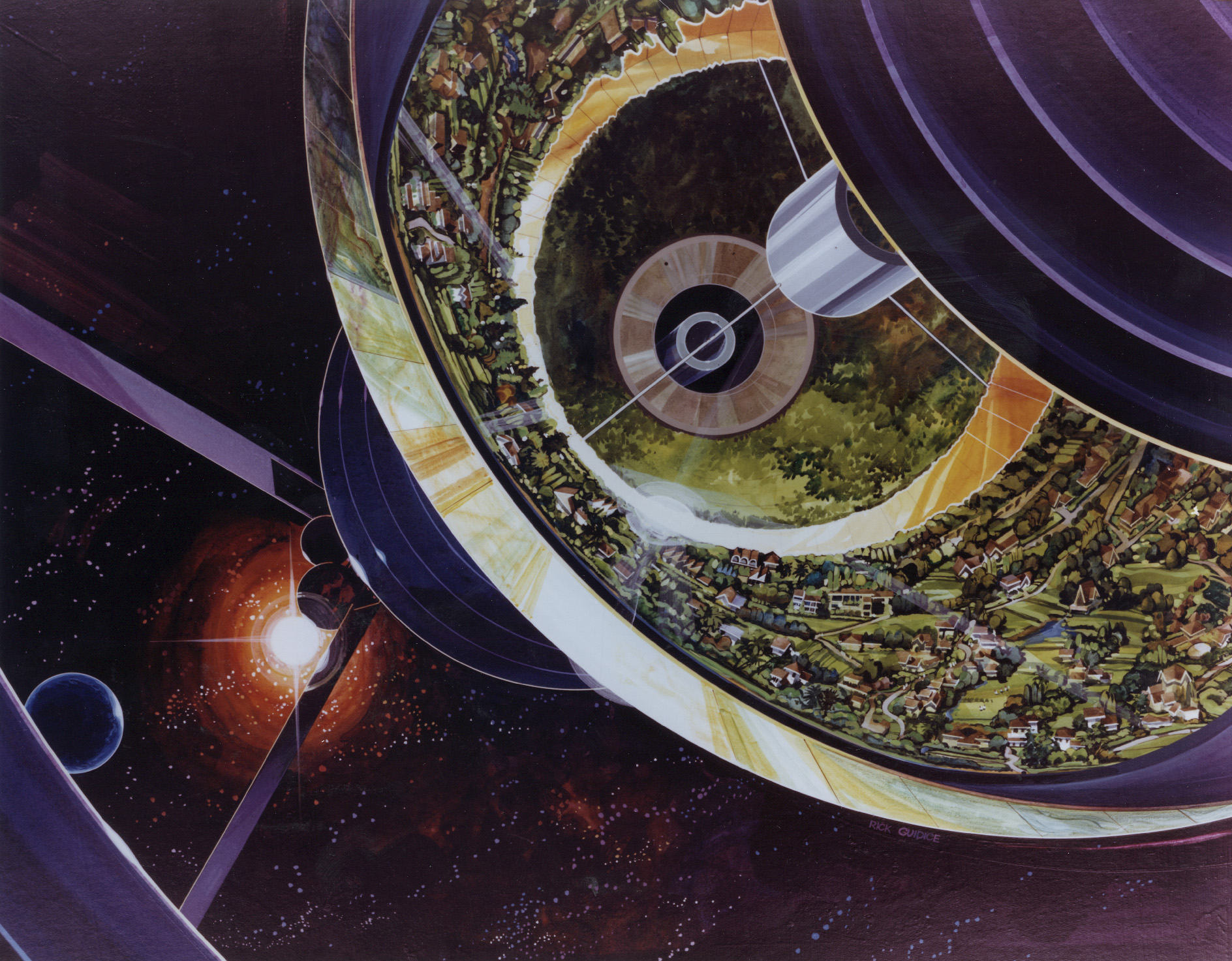

Air University Press, the academic publisher of the U.S. Air Force, this last July published the The Commercial Lunar Economy Field Guide: A Vision for Industry on the Moon in the Next Decade, edited by Michael Nayak. The document presents a revolutionary blueprint for the transformation of the Moon from a scientific curiosity into a vibrant, self-sustaining industrial marketplace in the 2030s. Central to this vision is DARPA’s 10-Year Lunar Architecture (LunA-10) initiative, which seeks to establish integrated, interoperable infrastructure that lowers the barrier to entry for all lunar users. This may help with execution of the Trump Administration’s recent Executive Order (EO) which aims to establish a space policy “… that will extend the reach of human discovery, secure the Nation’s vital economic and security interests, unleash commercial development, and lay the foundation for a new space age”. The Field Guide and the EO are not perfectly aligned but the former provides an architectural blueprint to implement the strategic mandate prescribed by the latter. The EO provides the authority and deadlines (e.g., returning to the Moon by 2028), while the Field Guide provides the technical and economic pathways (LunA-10) to achieve those goals in a manner that will add value for taxpayers. While diving into the specifics of the Field Guide, along the way I’ll highlight how it will help implement the EO.
A Strategic Vision Beyond Unsustainable Symbolism
For decades, lunar exploration has followed a “Flags and Footprints” paradigm—symbolic, government-funded missions that are entirely self-reliant, bringing every gram of power, water, and data storage from Earth. The Field Guide argues that this approach, while scientifically valuable and a display of national pride, is economically unsustainable at the current “million-dollar-per-kilogram” cost of delivery. This is in alignment with the EO which calls for enhancing cost-effectiveness of exploration architectures while establishing initial elements of a permanent lunar outpost by 2030 to ensure a sustained American presence on the Moon, which will lay the groundwork for the exploration of Mars.
The Role of LunA-10
LunA-10 serves as a catalyst to seed the foundational nodes of a future economy on the Moon and in cislunar space. Similar to how DARPA fostered development of the internet and GPS, LunA-10 identifies “scalable nodes” where government investment can accelerate commercial capability. The goal is to move toward a model where NASA and commercial industry can purchase utilities—like power and data—as services, rather than owning the hardware.
Four Economic Ages of the Moon
The Field Guide identifies four distinct stages of development for the lunar economy:
- The Exploration Age (2025–2030): Characterized by one-of-a-kind, government-backed missions. Infrastructure is limited, confined to individual landers which are non-extendable.
- The Foundational Age: An era of “trail-building” where lunar surface transportation infrastructure is built out and users begin to subscribe to pilot services for power and communications.
- The Industrial Age (Target: 2035): Scaling through commoditization. Multi-service hubs provide consolidated thermal and power management, and large-scale manufacturing begins.
- The Jet Age: A state of self-sufficiency where In-Situ Resource Utilization (ISRU) will produce services such a propellent depots (lunar hydrogen and oxygen) to enable frequent, low-cost “rocket hop” transport across the lunar surface, servicing permanent settlements and supporting missions headed for deep space.
Pillars of Commercial Lunar Infrastructure
To achieve this vision, the Field Guide details several critical technology sectors that must transition from their experimental phases to full scale industrialization.
Power and Thermal as a Service
In the Exploration Age, not being able to survive the 14-day lunar night is a primary mission-killer. LunA-10 proposes Infrastructure Hubs—massive solar power towers, some taller than the Statue of Liberty, placed at the peaks of eternal light at the Moon’s south pole, a concept that SSP has explored previously. Here is where the Field Guide diverges a bit from the EO, as the latter calls for surface nuclear reactors as a source of reliable power, prioritizing this initiative to be implemented by 2030. The authors of the Lunar Power chapter were operating under the assumption that NASA’s nuclear Fission Surface Power project would not produce hardware soon based on current TRLs, so this source of power was outside the LunA-10 timeline. Of course solar power could be complementary to nuclear power sources. With this approach these hubs would include:
- Multi-Service Nodes: The power towers do more than collect solar energy; they serve as “Swiss army knives,” on the Moon providing wireless power transmission, communication relays, and hosting Positioning, Navigation, and Timing (PNT) signals.
- Thermal Microgrids: Just as Earth-based buildings use central HVAC systems, lunar thermal hubs will manage heat for multiple users. They can recycle waste heat from high-energy activities (like mining) to keep nearby robotic assets warm during the lunar night, significantly reducing the mass each mission must carry for thermal survival. This aligns with the EO’s call to deploy nuclear reactors on the Moon which will need to dissipate waste heat that can be put to use.
Logistics: The Lunar Rail Network
Transportation is the lifeblood of any economy. Initially, lunar rovers will be slow and inefficient; moving the cargo of a single heavy lander over long distances could take thousands of hours.
- The Lunar Railroad: The Field Guide details a plan for a lunar rail network that dramatically increases the speed and volume of cargo transport.
- Multi-Use Corridors: These rail lines would serve as integrated infrastructure conduits. Alongside the tracks, corridors would include wired power lines, data cables, and pipelines for gas and/or fluid transport. This “bundling” of services reduces the amortized cost for every company operating along the route.
Mining and the Metal Ecosystem
Sustainable settlement requires moving away from Earth-dependency through ISRU.
- Oxygen Production: The Field Guide explores scaling oxygen plants (via methods like molten regolith electrolysis) to produce over 100 tons of oxygen per month by the Industrial Age. Companies like Offworld, Inc. are already working on plans to demonstrate this technology on the Moon in the near future.
- Metal Foundries: Waste regolith from oxygen production can be fed into a metal foundry to extract iron, aluminum, and magnesium like what Pioneer Astronautics (now part of Voyager’s Space Holdings) is developing with their Moon to Mars Oxygen and Steel Technology (MMOST) system. These materials can then be used by autonomous robotic systems to construct a variety of lunar infrastructure including habitats, roads, and landing pads.

- The Circular Economy: The vision is a “reduce, reuse, recycle” ecosystem where expended rocket stages or other used assets are repurposed for storage and scrap metal is forged into new products on-site.
Orbital Infrastructure: Cislunar Supply Hubs
The economy extends beyond the Moon’s surface into cislunar space.
- Space Harbors: Orbital aggregation hubs would act as deep-space analogs to terrestrial maritime ports hosting multiple value streams. Services would include rocket gas stations featuring robotic propellent transfer of stored hydrogen, oxygen, and methane; consolidated edge computing centers providing high-performance computing as a service such as autonomous docking calculations or mineral analysis by the hub’s more powerful servers; commodity sharing allowing arriving spacecraft to plug into the harbor to share excess solar power or fuel. By centralizing these activities, a space harbor would lower the mass of payloads a company must launch from Earth, effectively lowering the barrier to entry for any new commercial lunar venture. Arkisys has already begun to develop this type of infrastructure with The Port.

- Satellite “Retirement”: This model moves away from the “one-and-done” satellite paradigm toward a symbiotic system where older assets are repurposed as sharable resources contributing to the growth of the hub.
Economic and Legal Enablers
The Field Guide emphasizes that technology alone cannot build an economy; a transparent and predictable market framework will be needed.
Property Rights and Law
Under current international law (i.e. the Outer Space Treaty), nations cannot “own” the Moon. However, the Field Guide argues for “Continued Use” and “Allocated” rights, where companies can have exclusive control over the specific resources they extract and the infrastructure they build. The Artemis Accords provide the foundation for global consensus on these principles.
The Commodities Exchange and Board of Trade
To attract serious private capital, the Moon needs market transparency. The Field Guide recommends establishing a Space Commodities Exchange and a Lunar Board of Trade to define the quality and value of lunar resources like oxygen and regolith. This would allow for trading, hedging, and financing similar to terrestrial commodities like gold or oil.
Interoperability via the LOGIC Consortium
A major risk to a nascent economy is vendor lock-in where different companies’ hardware cannot communicate or share power without significant switching costs. To prevent this, DARPA established the Lunar Operating Guidelines for Infrastructure Consortium (LOGIC). LOGIC focuses on creating voluntary consensus standards for docking ports, power connectors, and communication protocols, ensuring the Moon becomes an open platform rather than a fragmented collection of proprietary systems.

The Path to 2035
The Commercial Lunar Economy Field Guide concludes that while the engineering challenges of the Moon are “DARPA-hard,” they are solvable. By 2035, the goal is to reach break-even where the economy becomes self-sustaining and the risk for private investors is sufficiently lowered.
Successfully building this infrastructure will do more than just unlock the Moon; it will provide the operational experience, fuel and infrastructure (via ISRU) necessary for humanity to expand throughout the Solar System and eventually, to the stars. The Moon will no longer be just a destination for flags and footprints, but a key stepping stone on the path to becoming a spacefaring civilization.
Execution of the EO in Alignment with the Field Guide
To implement the Executive Order using the principles of the Field Guide the following actions should be prioritized with the caveat that the deadlines specified in the EO will be challenging to meet using many of the technologies in the Field Guide, given they’re current TRLs. Still, regardless of aspirational timelines that may be pushed out, the actions below will ensure that when commercial lunar development comes together in the 2030s, it will be cost effective and sustainable.
Action 1: Immediate Transition to Lunar Commodity Contracts
- The Problem: Procurement of traditional government-owned hardware is slow and expensive.
- Implementation: Within the 180-day window mandated by the EO, NASA and the Dept. of Commerce should issue Multi-Service RFPs. Instead of buying a rover, the government should buy “Kilometers of Cargo Transport” or “Megawatts of Night-time Power” from commercial infrastructure nodes described in the Field Guide.
- Lead Agency: NASA (Commercial Moon to Mars Program).
Action 2: Deploy the Lunar Rail Pilot Program
- The Problem: The EO’s 2030 call for a permanent outpost cannot be sustained long term by slow, battery-limited rovers.
- Implementation: Accelerate the Field Guide’s Lunar Rail concept to connect the 2028 landing site to the 2030 outpost location. This would create an industrial corridor that bundles multiple services, e.g. power, data, and transportation, to reduce the cost of individual missions. Such linear easements along railroads would serve as the logistical spine for moving massive cargo fostering economic development in accordance with the EO.
- Lead Agency: DARPA (transitioning to Space Force/NASA).
Action 3: Codify the Lunar Board of Trade
- The Problem: The EO seeks $50B in private investment, but investors need price certainty.
- Implementation: Use the Field Guide’s framework to establish a Lunar Commodities Exchange. Define the “Lunar Standards” for oxygen and water purity. This allows private companies to “pre-sell” resources they will mine in the near future to finance their current operations.
- Lead Agency: Department of Commerce (Office of Space Commerce).
Action 4: Integrate “Defense-by-Commerce” in Cislunar Space
- The Problem: The EO calls for US superiority and threat detection in cislunar space.
- Implementation: Equip the Field Guide’s Infrastructure Hubs with Space Situational Awareness (SSA) sensors. By hosting defense sensors on commercial power/comms nodes, the U.S. achieves the responsive and adaptive architecture required by the EO at a fraction of the cost of dedicated military satellites.
- Lead Agency: U.S. Space Force.
Conclusion
The Commercial Lunar Economy Field Guide is a ready-made roadmap for implementation of the Whitehouse’s Executive Order on Ensuring American Space Superiority. By treating the Moon as an industrial zone the administration can meet the prescribed milestones through commercial leverage and ISRU rather than massive new government spending. Execution of the plan should focus on contractual reform—buying services from the infrastructure nodes as defined in the Field Guide. With power, comms and security systems in place, companies like Galactic Resource Utilization (GRU) Space can build hotels on the Moon starting in the early 2030s to house scientists, entrepreneurs and maybe even tourists as described in their white paper.

