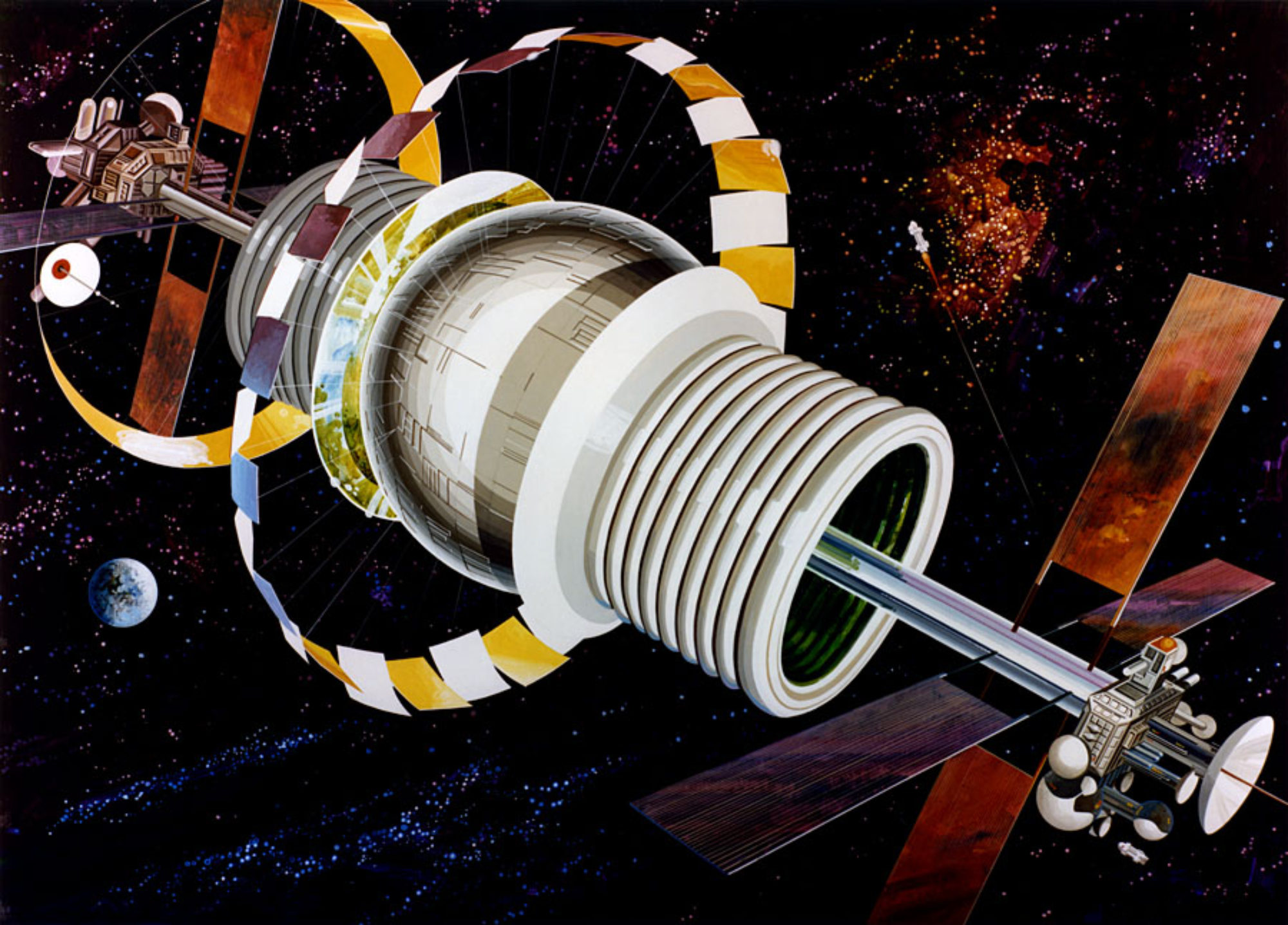

An autonomous factory on the Moon cannot be sustainable if all the components have to be shipped from Earth because, as we all know, the cost of launching mass off our planet and landing it on the Moon can be punishing. Traditional plans assume that high-tech components will be continuously resupplied from the home world. A recent journal pre-proof in Acta Astronautica by Velin Yordanov and Georgi Sotirov from the Space Research and Technology Institute at the Bulgarian Academy of Sciences describes a more elegant solution. They call the core problem the “Silicon Gap” and propose a hierarchical autonomous architecture designed to narrow it dramatically during the early stages of lunar industrialization.
What Exactly Is the Silicon Gap?
Modern electronics, precision sensors, radiation-tolerant processors, high-tolerance actuators, seals, and reactor control hardware require purity levels, cleanrooms, and fabrication chains that early lunar infrastructure simply cannot reproduce. Conventional silicon chips are also vulnerable to radiation-induced single-event upsets (bit flips). The authors define the Silicon Gap as the mismatch between the full set of high-complexity subsystems required for long-duration autonomous growth and the much smaller set of bulk materials and simple components that an initial in-situ resource utilization (ISRU) system could realistically manufacture.
They partition components of the model into three categories:
- Earth-supplied high-complexity items: reactor core and controls, radiation-tolerant processors, precision sensors and communications, high-tolerance bearings and seals, initial rover electronics and spares. These stay imported.
- In-situ producible low- and medium-complexity items: iron, nickel, aluminum, silicon feedstocks, oxygen, hydrogen, potassium hydroxide (KOH) electrolyte precursor, structural chassis, panels, pylons, wires, mirrors, rails, and selected battery and frame elements. These are explicitly modeled in the production chain.
- Hybrid components: motors, relays, simple logic carriers, sensor housings, battery assemblies. Structural mass is sourced locally; precision inserts remain Earth-supplied.
The goal is not zero imported mass. It is to decouple the recurring replacement burden from the linear growth of total infrastructure. As the colony expands, most of the increasing mass (structures, batteries, simple robots) comes from local regolith while Earth resupply is reserved for the high-value cores (e.g. CPUs) and inserts that cannot yet be made on the Moon. At some point, companies like Besxar will be manufacturing semiconductors in space, which could significantly lower the cost of transporting these components to the Moon. But until lunar surface chip production infrastructure matures, the silicon gap needs to be addressed.
The Hierarchical Architecture: Broodmother, Praetorian, and Constructive Automata
The solution modelled by Yordanov and Sotirov concentrates scarce complexity in a protected central node called the Broodmother (BM). This is not the arachnid horror queen of video games, but a benevolent machine overseer – an industrial and control hub that retains the imported processors, precision metrology, reactor controls, and the manufacturing tools needed to turn regolith into usable parts. It houses the energy system, material inventories, job scheduler, and assembly capability.
Repetitive field work such as excavation, loading, and transporting of regolith plus other construction support activities are handed off to a swarm of simpler robots dubbed Constructive Automata (CA). These are deliberately limited robotic machines. Instead of full onboard microprocessors, they rely on physically encoded instruction media—essentially optomechanical readers and relays with finite-state execution. The BM writes or rewrites the physical “scripts” (duty cycles, movement routes, construction sequences) when a CA returns for charging or servicing. This keeps high-level planning centralized and reduces the imported high-complexity microprocessor content in each field unit. In the optimistic target scenario, a CA could be up to 95% ISRU-sourced by mass, with only about 5% precision chip inserts supplied from Earth.
An intermediate rover, what the authors call a Praetorian (again, not the malevolent elite imperial guard in ancient Rome, but a middleware mobile extension of the BM), which handles scouting, heavy logistics, marker placement, and recovery of failed or blocked CAs. The overall control flow is hierarchical: the BM issues task orders, CAs execute them via finite-state machines, and physical cues (tracks, rails, piles of regolith, markers) provide a low-bandwidth stigmergic layer that complements direct commands.
The authors acknowledge up front that the architecture has a major risk: the BM is a single-point-of-failure node. Partial failures might be repairable by the Praetorian replacing modules or reconnecting interfaces. Critical failure of power control, the scheduler, or the main manufacturing interface would strand the local colony. Future robustness would require duplicated nodes or greater manufacturing capability which are not addressed by the present model.
Power: A Compact Sodium-Cooled Fission Reactor
Continuous and sufficient baseload power independent of the two-week lunar night is essential, so solar energy and battery storage would not work on their own. The design for this model uses a sodium-cooled nuclear reactor (SNR) with a nominal electrical cap of 40 kWe inside a 150 kWe thermal envelope. Effective conversion efficiency is targeted in the 25–30 % range typical of Stirling-based compact fission surface power concepts already studied by NASA. Roughly 850 kg is allocated to the reactor and power-conversion envelope inside the BM. Admittedly, this is an aggressive approach that assumes partial regolith shielding after landing and does not include a full multi-ton human-rated system with long transmission lines and extensive redundancy.
Thermal energy is coupled directly to high-temperature processing. Radiator area estimates are optimistic (around 20 m² at high temperature) because a substantial fraction of heat is absorbed by the industrial processes rather than rejected to space. The model treats power as a scheduling constraint: jobs start only when both materials and instantaneous electric margin are available.
The Broodmother only works well on activities in its local vicinity. To facilitate work farther away and to augment the nuclear power source, the design adds an extra solar heating system: a mirror grid made from simple reflective panels that direct sunlight onto the processing equipment. TransAstra is already developing a similar component called the Sun Flower Power Tower. During the lunar day this extra heat and light helps melting, electrolysis, and other high-temperature work, so the reactor does not have to supply all of the energy.
Iron-nickel (Fe-Ni) batteries based on tried and true Edison chemistry are chosen for CA mobile storage. They offer far lower energy density than lithium-ion (30–50 Wh/kg versus 150–250) but exceptional cycle life (5,000+), tolerance to abuse, and high lunar manufacturability. Anode and cathode plates are formed from refined Fe and Ni; KOH electrolyte comes from local potassium processing. A 15 kg CA needs roughly 240 Wh for a 12-hour duty cycle at 20 W average draw, translating to a battery mass of about 6.8 kg, nearly half the robot’s mass.
Turning Regolith into Feedstocks
To convert the resources in lunar soil into useful materials the processing chain is modelled in three stages:
- Molten Regolith Electrolysis (MRE) heats regolith above 1400 K and applies electrical potential to dissociate oxides, producing oxygen and a mixed metallic melt. Phase separation by density yields an Fe-rich fraction and a secondary stream. Modeled throughput is roughly 100–120 kg of regolith per day under realistic duty factors (not the theoretical 120–180 kg at continuous full power). I’ve explored this process in previous posts here and here.
- Vacuum Distillation (VDM) and Molten Salt Electrolysis (MSE) refine the metals further. VDM separates the components in regolith by heating the mixture in lunar vacuum so impurities and metals separate by their respective vapor pressure. It is used to refine the metals further (e.g. Iron for chassis, pylons, rails, panels, other structures: Nickel for Fe–Ni battery electrodes and motor-related parts). MSE produces higher-purity silicon and aluminum. The aluminum is used in mirrors, panels, wires, optical/reflective parts, and thin films in the next process. The silicon is used in glass/optical substrates, logic carriers, and refractory-related parts.
- Vapor Deposition Assembly (VDA) takes the aluminum output from MSE and creates thin aluminum films used as substrates for the physical instruction media of the CAs. This method is similar Blue Alchemist, a process under development by Blue Origin for fabricating solar cells from lunar regolith.
The physical instruction media are the CA’s programs stored as a physical object, not as code in a microprocessor memory. In the architecture, each CA is a simple finite-state machine. It does not carry a radiation-hardened computer that stores tasks in RAM or flash. Instead, the Broodmother writes a task script onto a replaceable carrier. When the CA returns for charging or service, that carrier can be swapped or rewritten so the robot gets a new job. The VDA’s only role is to produce the substrate: refined aluminum is vacuum-deposited as ~50 µm film on a rotating surface. That film is the blank “tape” or card on which the instructions are then encoded.
Daily model yields using the scenario parameters include approximately 18.5 kg Fe, 8 kg Al, 0.8 kg Ni, 4.2 kg Si, 45 kg H₂O, plus oxygen, hydrogen, and a critical 0.15 kg of potassium. Potassium is a sharp bottleneck because it feeds KOH production for the Fe-Ni batteries. Without enough potassium, battery fabrication stalls and CA growth slows even if bulk metal inventories look healthy.
The approximate CA fabrication rate—one ~15 kg unit every 1–2 days—is a downstream scheduling result, not a direct conversion of regolith into robots. It requires simultaneous availability of refined metals, Ni and KOH for batteries, silicon-bearing feedstock for logic carriers, free manufacturing queue time, and sufficient electric power.
Mission Profile and Site Selection
The initial landing mass is assumed to be roughly 1,500 kg (850 kg reactor/power, 650 kg manufacturing and mobility). Site selection uses an orbital “Triple-Lock” remote sensing strategy combining neutron spectrometry and synthetic aperture radar for detection of hydrogen/water ice, gamma-ray spectrometry to find potassium (KREEP regions), and X-ray spectrometry to prospect for nickel enrichment. Polar locations such as Malapert Massif (South) or Mons Peary (North) are favored for proximity between the illuminated peaks and permanently shadowed regions containing water ice, an ideal location to supplement power from the nuclear reactor with reflected sunlight. Solar-assisted heating can offset part of the electrolysis power demand.

Deployment proceeds in phases: orbital reconnaissance, landing and initialization, reactor activation and regolith shielding, initial MRE, first CA production, swarm expansion, and industrial expansion with mirror arrays and simplified transport infrastructure.
The Simulation Framework
An agent-based (CAs, Praetorian rovers), queue-based (BM job waiting list) reduced-order model coded using Python 3, couples energy supply, material inventories, manufacturing jobs, terrain, resource fields, and CA logistics on a 220 × 220 cell lunar grid. The terrain is a smoothed random field (i.e. statistically generated but spatially correlated topography, used as a first-order stand-in for rolling lunar hills); resources are grouped in clustered deposits, meaning the materials sit in patches, like pockets of ore or ice rather than a uniform distribution.
The BM runs a primarily deterministic scheduler with TinyML-style priority biasing based on energy margin, scarcity, utilization, and backlog. As stated previously, CAs are finite-state machines with several core states (e.g., idle, travel, harvest, return, charge, assist, failed) plus a few contingency states.
Success criteria were chosen to be deliberately narrow:
- Energy closure (no persistent deficit).
- No permanent scheduler deadlock.
- Local production of the CA parts and infrastructure.
- Completion of milestones in a staged progression (first CA, multi-CA operation, shelter, mirror field, stable power-supported growth).
- Bounded, recoverable CA failures via redundancy or Praetorian rescue.
A baseline 180-day run at 40 kWe with nominal resource abundance shows gradual rather than explosive growth. Power is not the dominant bottleneck near baseline. Lower electrical caps (20–30 kWe) produce zero CAs in the first 30 days and hundreds of power-blocked jobs. At 35 kWe partial recovery appears; at 40 kWe the system reaches nine CAs with no power blocks. Potassium scarcity creates a different failure mode: bulk processing continues but battery and CA production stall. A stress case disabling Praetorian recovery after day 12 and accelerating motor failures shows that even with a powered BM producing six CAs, unrecovered faults can drive operational worker count to zero.
The model therefore identifies distinct limiting mechanisms: electrical power, process energy intensity, K/Ni availability (especially for batteries), BM manufacturing queue capacity, and mobile-agent logistics and recovery. Growth follows the narrowest link in the chain: resource access → MRE/refinement → KOH/Ni → batteries → CA assembly → deployment.
The Importance of the Physical-Logic Approach
By replacing full microprocessor stacks in the CAs with optomechanical readers and relay-based finite-state machines, the architecture shifts the dominant failure modes from radiation-induced bit flips toward mechanical wear, dust contamination, contact degradation, and actuator faults. High-complexity planning and metrology stay inside the protected BM. The simulation demonstrates that agents with only about ten active states, when properly coordinated, re-tasked, repaired, and supplied by the central node, can still contribute to colony-scale growth. The key takeaway being: low-complexity field units do not need independent high-level intelligence if they are embedded in a hierarchical production and logistics loop.
Caveats, Boundaries, and the Road Ahead
The paper is clear on its limits. It is a system-level architectural study and reduced-order simulation, not a high-fidelity engineering design or flight-ready blueprint. The variables are scenario parameters chosen for internal consistency. The results show architectural plausibility within the model, not validated reactor performance, process chemistry, or real-world guarantees. In addition, the reactor mass, radiator sizing, MRE yields, manufacturing tolerances, and CA reliability are not validated engineering results. The 40 kWe figure is aligned with NASA-class fission surface power studies, but the overall envelope is an optimistic estimate. Future work must add detailed electrochemistry, thermal-fluid dynamics, stochastic reliability, explicit BM partial-failure modeling, dust and thermal-cycling effects, and a full mass-ledger that quantifies how resupply flights can be avoided.
With those caveats firmly in place, the concept is worth examining in detail for planning lunar industrial operations. The proposed architecture is valuable, providing a clear partitioning of the system components that quantifies the residual Silicon Gap, reproducible simulation criteria, and an identification of the critical bottlenecks. The choke points are potassium for batteries and the system’s ability to rescue, tow, repair, or replace failed CAs so that individual robot failures, if not planned for and addressed, could accumulate into a collapse of operations.
The results of the study indicate that, under the stated assumptions, a hierarchical ISRU-driven bootstrap layer can maintain internal consistency: energy budgets close, the scheduler does not deadlock, local parts and infrastructure are produced, milestones are reached, and failures remain reasonably bounded.
In short, the work shows that early lunar industrialization need not wait for a complete terrestrial supply chain to be replicated on the Moon. By protecting the high-complexity core, manufacturing the bulk of the growing mass locally, and coordinating simple finite-state machines through a central node, a reduced-resupply architecture becomes conceptually plausible. Whether that approach survives the transition from reduced-order simulation to engineering reality is the next, much harder question. Clearly, more work is needed, but the framework at least gives future designers a coherent place to start.