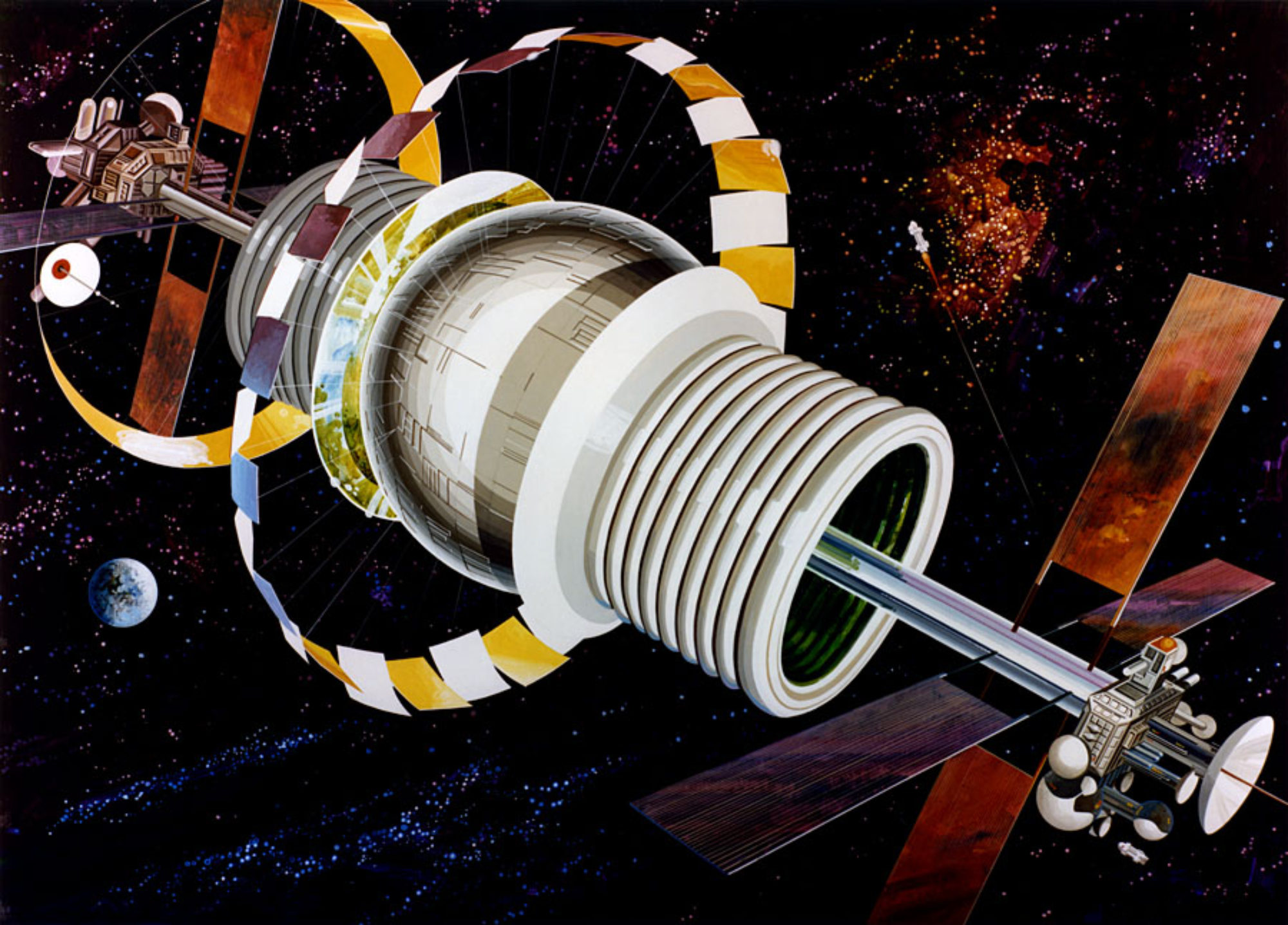

Pale Red Dot is an acronym for Polis-based Architecture for the Long-term Exploration of the Red planet, with Exciting and Diverse Developmental Opportunities to Thrive. This concept, which was the first place winner of the NASA 2023 RASC-AL competition in the category of Homesteading Mars by a team* at the Massachusetts Institute of Technology Space Resources Workshop, focuses on establishing a city-state with Earth-independence supporting extensive scientific exploration on Mars. NASA’s RASC-AL (Revolutionary Aerospace Systems Concepts – Academic Linkages) competitions foster innovation of aerospace systems concepts, analogs, and technology by bridging gaps through university engagement.
This architecture envisions sending robotic precursor missions to Mars following experience gained from NASA’s Artemis program to survey sites, test technologies, and stockpile resources like water and propellant. Lets be honest up front that this paper is two years old and timelines for return to the Moon have been moved out. Predictions on milestones in the paper for this plan as described below should take these delays into account. With the current Trump administration the fate of Artemis program is evolving. There are many possibilities being proposed to streamline NASA’s plans, one of which by retired aerospace engineer and entrepreneur Rand Simberg, leverages public-private partnerships to get humans back to the moon. Keeping this in mind, when humans return to the lunar surface, Pale Red Dot would leverage the engineering knowledge gained from robotic landers and human missions used in Artemis or any subsequent initiative that emerges.
Next, in 2035 (at the earliest), robotic cargo SpaceX Starships would deliver approximately 5,800 tons of equipment consisting of habitats, nuclear microreactors, farming modules, manufacturing facilities, and in-situ resource utilization (ISRU) systems. By 2040, two crewed Starships would transport 36 colonists to Mars to establish two closely located villages. Costs would be shared by nations that are signatories of the Artemis Accords, 56 and counting as of this post.
The study used a modelling approach that prioritized safety and crew health in design of the architectures, both in transportation and surface facilities. Relying heavily on NASA’s current career permissible limits for space radiation, exposure was minimized by splitting the crew among two Starships, each one adding a 71-ton 35cm polyethylene shield, and dashing to Mars within 113 days. Upon arrival, to guard against galactic cosmic radiation and solar particle events, the initial surface habitats will have integrated 3m water tanks in their roofs for radiation shielding. The plans call for gradually building out radiation-proof underground tunnel habitats. Although not considered in this scenario, locating the settlements in a lava tube could be advantageous not only for ready-made radiation protection but thermal management as well.
The Pale Red Dot (PBD) architecture emphasizes robustness and thriving, rather than just survival, through substantial infrastructure supporting 36 crew members across two Martian villages. This includes extensive makerspaces and significant reliance on ISRU. The two nearby villages are designed to be energy-rich, water-rich, food-rich, time-rich, and capability-rich, with substantial self-rescue capabilities.

The site chosen for the PRD settlements was based on a NASA Exploration Zone workshop in 2015. Called Deuteronilus Mensae, its situated near a glacier water source, in a hilly region that may be suitable for tunneling. More recent discoveries by the European Space Agency’s Mars Express orbiter, using its MARSIS radar, have revealed extensive water ice deposits up to 3.7 km thick beneath Mars’ equator in the Medusae Fossae Formation.
Extraction methods for sourcing in situ water were not addressed in the PRD architecture. This should not be a problem though as the communities could leverage methods that have already been validated, such as the RedWater System which could drill for, and collect, subsurface water ice.
The paper argues that such a large architecture, with its economies of scale and specialization, is crucial for mitigating the risks associated with a long-duration, minimally resupplied mission to Mars. Crew time modeling suggests that smaller missions with 12 or fewer people would not provide sufficient free surface traverse time for meaningful science and exploration. The estimated lifecycle cost for this campaign is $81 billion, with a peak annual cost of $6.6 billion.
The PRD concept highlights the potential for creating a true community on Mars with sufficient social complexity for humans to thrive. Furthermore, it proposes the geopolitically significant option of including crew members from every Artemis Accords signatory in the first human mission to Mars. Comprehensive details are provided on the dual-habitat architecture, concept of operations, mission control, technology roadmap, and risk burn-down plan.
* MIT Pale Red Dot Team Membership:

