
The Gravity Prescription (GRx), a term first coined by Dr. Jim Logan, refers to the minimum “dosing” of gravity (level and duration of exposure) to enable healthy conception, gestation, birth and normal, viable development to and throughout adulthood as a human being…over multiple generations. It should be noted that the GRx can be broken down into at least three components: the levels needed for healthy pregnancy (conception through birth), early child development, and adulthood.
The Japan Aerospace Exploration Agency (JAXA) has been studying the adult gravity prescription for mitigation of mammalian physiological issues that arise in space due to microgravity using mice for about a decade. To conduct this research, they’ve been using the Multiple Artificial-gravity Research System (MARS) short arm centrifuge in the Kibo module on the International Space Station (ISS). This will help us understand what dosing level of gravity is required to prevent the myriad of health issues (e.g., serious reduction in bone and muscle mass, ocular changes, weakening of the immune system – there are many more) that arise in mature adults when exposed for long periods to microgravity, to inform countermeasures for long-duration spaceflight and settlement.
By way of background, I reported back in 2021 on JAXA’s first long-term mouse study comparing mice reared under microgravity conditions to a cohort raised under 1g artificial gravity in the MARS centrifuge, which found that Earth-normal artificial gravity appears to prevent the negative health effects of microgravity. In the same post, I provided an update upon publication of the results of a second experiment executed a couple of years later, which tested mice in Moon gravity and found that 1/6g prevents muscle atrophy in mice, with the downside that this level of artificial gravity cannot prevent changes in muscle fiber (myofiber) and gene modification induced by microgravity. There appeared to be a threshold between 1/6g and Earth-normal gravity, yet to be determined, for skeletal muscle adaptation. Then in 2023 we got a few more data points helping us zero in on the right dose, at least for the adult GRx, between Moon and Earth levels of gravity.
I mentioned this new preliminary data in my presentation at ISDC 2024 on how the GRx may impact the future of space settlement. The results came from a NASA-funded experiment in cooperation with JAXA, headed by Dr. Mary Bouxsein and collaborators, that studied adult mice launched to the ISS on SpaceX CRS-27. The mice were split into four groups and dosed in the MARS centrifuge at four levels of gravity (microgravity, 0.33g, 0.67g, and 1g). The results were presented at the American Society for Gravitational and Space Research (November 2023). Still, no formal paper had been published at that time, only an abstract from the conference talk. Preliminary results showed that hindquarter muscle strength increased commensurate with the level of artificial gravity, indicating that spaceflight-induced atrophy can be mitigated with artificial gravity – more is better. Now the full study has finally been published in Scientific Advances with further details.
After each of the cohorts were individually treated to the four gravity levels in the MARS centrifuge and returned to Earth, the mice were euthanized and the researchers examined their soleus muscle (the calf muscle which is very sensitive to gravity levels), along with strength tests and blood biomarkers.
Key findings included:
- Muscle shrinkage (atrophy): In microgravity, the soleus muscle fibers shrank noticeably. At 0.33g, the muscle cross-sectional area was largely preserved—meaning it didn’t lose much mass. Higher gravity (0.67g and 1g) also protected muscle size.
- Muscle fiber type: Muscles have different fiber types—slow-twitch (good for endurance) and fast-twitch. Microgravity causes slow fibers to switch to fast ones. 0.33g partially prevented this switch, but 0.67g fully stopped it, keeping the muscle composition closer to normal.
- Muscle function: Strength tests (like grip strength) and electrical measurements showed that 0.67g was enough to maintain overall muscle performance. Lower gravity levels did not fully protect function.
The study also found 11 blood metabolites (small molecules that are intermediate or end products of metabolism) that changed depending on gravity level. These could serve as future biomarkers to monitor astronauts’ health without invasive tests.
Why does this matter? This is the first experiment to identify the adult GRx thresholds for muscle health. It suggests that 0.33g (close to Mars-level) helps prevent muscle weakening, but titrating to 0.67g is needed to fully maintain strength and normal muscle condition. For future space stations or vehicles with rotating sections to create artificial gravity, this information is valuable: partial gravity helps, but at least 0.67g is better for long-term missions. Crucially, these results could inform the spin-rate specifications for a Mars Cycler to generate artificial gravity to maintain muscular function for travelers to and from Mars.
In short, the paper shows that even moderate artificial gravity could mitigate the musculoskeletal problems astronauts face in space, helping keep crews healthier on deep-space journeys. The research used careful controls, multiple measurement methods, and advanced analysis to reach these clear conclusions.
The bigger question is what is the GRx for reproduction? If permanent settlements are to be established in space, they should be (in the long run) at destinations that enable biological self-sustainability, meaning we will want to have healthy children and raise families there as we expand out into the solar system.
One study conducted by Japanese researchers in 2019 aboard the ISS suggested that mouse embryonic growth may be possible in microgravity. But this experiment was only 4 days of embryo development, which took place after conception. Another study of pregnant mice from the shuttle era found serious issues with brain development after exposure to microgravity. These are just snapshots of embryo and later fetus development, and only in microgravity. There still have not been rigorous scientific experiments covering the full mammalian reproductive cycle through all its phases under variable gravity conditions mimicking the Moon, Mars, or higher levels below that of our home planet.

It is vitally important as the private space stations begin to replace the ISS and space tourism takes off (including maybe even hotels on the Moon), that we understand the risks and implications for having babies off Earth in lower gravity environments. Alex Layendecker, the founder of the nonprofit Advanced SpaceLife Research Institute (ASRI), told me the following in an interview about his Green Paper on Sex in Space: Consideration of uncontrolled human conception in emerging space tourism:
“With mass access to space, we’ll soon have groups of individuals going up solely for vacation/leisure purposes, and you can be assured some of them will be engaging in sexual activity. While it would be absurd to try to implement or enforce laws preventing sexual activity in those environments, the dangers associated with potential conception still exist. What is critically needed at this point is a better collective understanding of those dangers, their mitigation, and for space companies to be able to provide those paying customers with enough information that informed consent can be established – space is inherently dangerous already, and people launching into space are briefed on that.”
Besides JAXA and some limited research by NASA, there are just a couple of organizations dedicated to studying the GRx for reproduction. ASRI based at Cape Canaveral and a Dutch company called SpaceBorn United. SpaceBorn has space missions planned in the next few years using their ARTIS (Assisted Reproductive Technology in Space) platform, focused on mammalian conception and early embryo development, with a prototype “space-embryo-incubator” capable of treating samples with adjustable artificial gravity. Initial missions will send this device to space with male and female mouse gametes, where in vitro conception and 5-6 day embryo development will proceed under artificial gravity conditions. The embryos will then be cryogenically frozen and returned to Earth where, if approved, they will be implanted in natural wombs, where the pregnancy will progress on Earth. If successful, subsequent phases over the next couple of decades will focus on increasing stages of pregnancy in space and early embryo development on the Moon.
But SpaceBorn’s platform is a small, automated self-contained centrifugal device operated in microgravity. To really study the GRx for mammalian reproduction, a fully equipped (preferably crewed) variable gravity biolab large enough to rear lower organisms from conception through pregnancy to birth, maturing into adulthood – over multiple generations and progressing successively in higher mammals – would be required. A very tall order! But there are reasonable and well-thought-out concepts for such facilities I’ve explored here previously.
Currently, there are only a couple of companies with rotating space stations in their strategic plans to provide larger-scale artificial gravity laboratories that could be used for reproductive studies. Vast Inc., a well funded, privately held startup, explicitly lists an Artificial Gravity Station targeted for around 2035 in its official product roadmap, a long cylindrical design that will rotate end-over-end at ~3.5 RPM to create artificial gravity for long-term habitation. It would build on their modular (non-rotating) Haven-1 module currently planned for launch in 2027 and the follow-on Haven-2 station which would gradually add units, eventually leading to a 9-module configuration slated for 2032.

Above Space, with aspirations for rotating wheel type space stations in the 2030s, has significant engineering and funding hurdles, but is the only other player that has plans for variable gravity facilities in space.
In my presentation at ISDC2024 linked earlier in this post, I advocated for determining the GRx for reproduction sooner rather than later, especially given Elon Musk’s timelines for colonizing Mars. As Musk has made clear for years and with his recently revealed SpaceX compensation package tied to it, his vision for the company is to make humanity multiplanetary and build a city on Mars with a million people. Up until recently, he was projecting mid-century to achieve that milestone. His shifting focus from Mars to the Moon aside, does he expect the population of his Martian colony to be composed of just adults? Musk, who has warned of population collapse and low fertility rates here on Earth as one of humanity’s biggest challenges, has been quoted as saying, “People are going to have to revive the idea of having children as a kind of social duty. If you can, and are so inclined, you should. Otherwise civilization will just die.”

I’m pretty sure he envisions that the people occupying his city on Mars will want to have children there. And he’d probably want to know the GRx for reproduction well before significant numbers of people began migrating there to stay. A variable gravity research facility in low Earth orbit dedicated to studying mammalian physiology, including reproduction in less than 1g, could be built using SpaceX hardware and would not cost much more than Musk’s pocket change, but I’ve seen no indication that this is a priority for him.
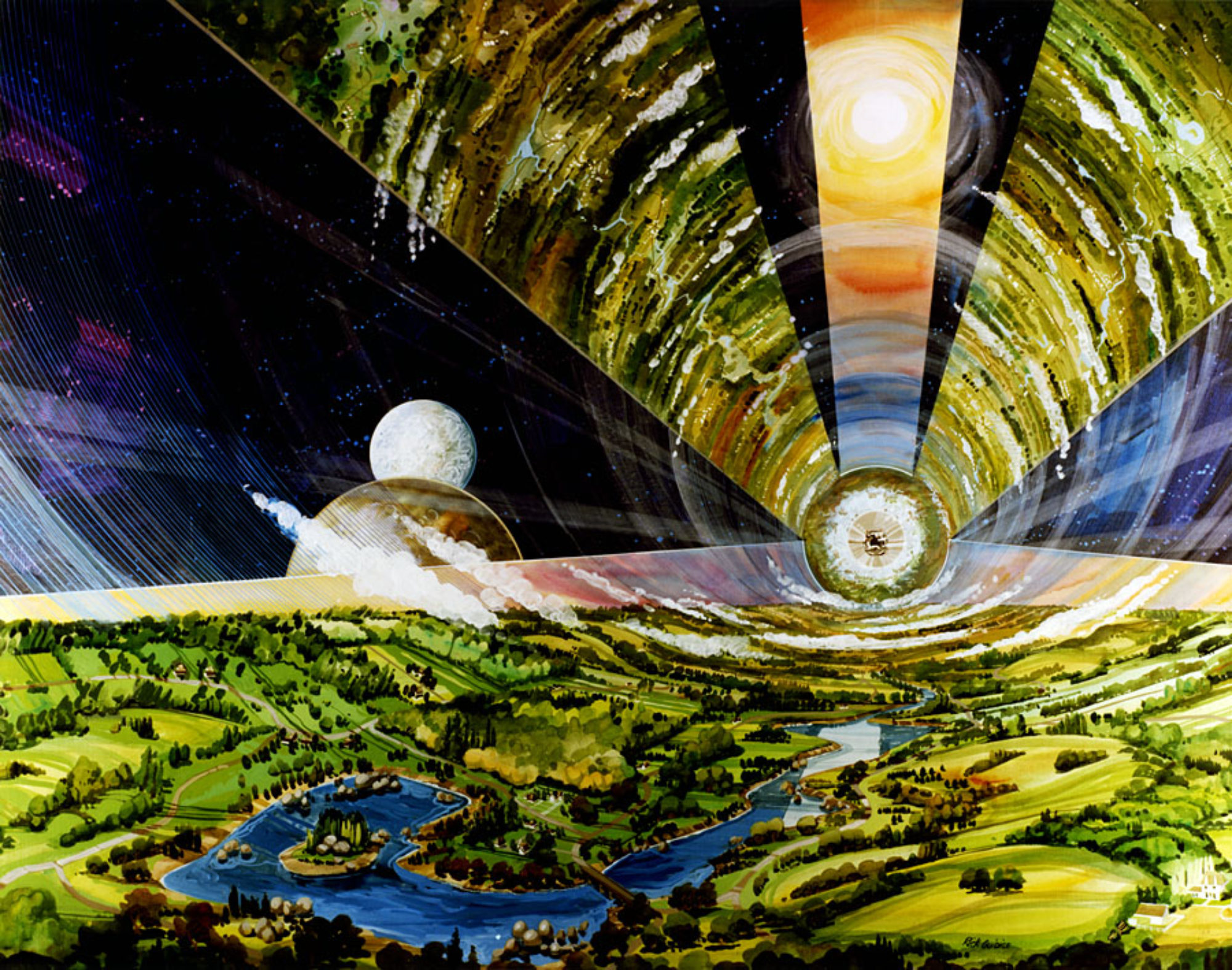
Of course, there are others, affectionately called O’Neillians, who say we know 1g works, so let’s not waste time and just get started building rotating space settlements like Kalpana One, a 500m diameter starter unit located in equatorial low Earth orbit. Shielded by Earth’s magnetic field and therefore requiring less mass for radiation shielding, it would be much easier to accomplish than the enormous miles-long settlements O’Neill envisioned to be placed out at Earth-Moon Lagrange Point L5. The attractiveness of this approach (in LEO) may be waning with the rise of AI and what will likely be a proliferation of orbital data centers in the next few years. Cowboy Space has just filed with the FCC for a literal Stampede of 20,000 satellites adding to the queue of companies seeking regulatory approval for their megaconstellations, including Blue Origin’s Project Sunrise (51,600), Starcloud (88,000), and SpaceX’s 1 million satellites, all in sun-synchronous orbits ranging from 500 to 2000 kilometers. It may be getting pretty crowded up there soon, increasing the risk of collision with large cross-section space stations that are not easily maneuvered out of the way.
Personally, my view has evolved on the urgency for determining the GRx for reproduction on the Moon or Mars. I still hold that healthy human reproduction in lower-gravity environments is highly uncertain, given millions of years of evolution in Earth’s gravity, and carries a substantial risk of complications at every stage of reproduction. Being inspired by O’Neill, I was admittedly biased toward his approach to mitigate these risks and had a preference for spacious artificial gravity worlds. This led me to believe that if we confirmed through studies of the GRx for reproduction that having children in less than 1g could lead to dangerous complications and, therefore, be morally wrong, the information might bend the arc of space development toward free space settlements. Knowing we could not have children on the Moon or Mars might start to change the mindset of many space settlement advocates, whom the great science fiction author Isaac Asimov called planetary chauvinists, leading to diversion of resources toward building the infrastructure needed to construct rotating space settlements like Kalpana. I’m old enough to remember that O’Neill invented one of the key technologies for building these huge structures: a mass driver intended to be placed on the Moon to launch massive amounts of lunar regolith into space so that it could be processed into radiation shielding for these colonies. Advances in robotics, in situ resource utilization (ISRU), in-space assembly, life support systems, and many other technologies are needed to enable O’Neill colonies. Many of them are proceeding at pace anyway, but I thought that if we found the GRx for reproduction was not less than 1g, it would put a sense of urgency around these efforts.
However, it looks like market forces may be changing all this. I did not anticipate Elon Musk advocating for mass drivers on the Moon. Though he says they would be used for launching SpaceX’s AI satellites, the infrastructure for ISRU and electromagnetic launchers looks like it may be coming to Luna sooner than we expected and can certainly be retooled to fling regolith into space for shielding rotating space settlements, even larger ones, if the drive (and markets) are there.
But rather than the GRx for reproduction being the determining factor for where we settle space – planetary surfaces or free space colonies – a split life cycle may be the solution. This approach, credited to Kelly and Matt Weinersmith in their book A City on Mars, suggests using both destinations! As clarified in a presentation at ISDC2024 by Dale Skran, Chief Operating Officer & Senior Vice President of the National Space Society, this new way of thinking (not an official position of NSS) acknowledges that we probably need Earth normal gravity for having children and suggests that a rotating space station birthing center be placed in orbit above surface colonies on the Moon or Mars. Couples would conceive, bear children, and raise them in a healthy artificial gravity crèche, allowing them to mature to early adulthood, after which families or individuals may choose to remain in space or relocate to the low-gravity surface communities below.
So research by Dr. Bouxsein et al. may be homing in on the adult GRx, with the results from their study paving the way for practical countermeasures against health issues adult astronauts will face in microgravity on long-duration missions in space. But the artificial gravity dose level for reproduction needs much further study before we can safely say biologically self-sustaining space settlements in less than 1g will be possible. Until then (and after, if the answer is no), split life cycle communities may be the strategy for an expanding population migrating out into the solar system and beyond.


